Medical device manufacturers operate in an environment where efficiency, consistency and quality are essential. As demand changes, production volumes increase and supply chains become more complex, manufacturers need to ensure that every part of the process is working as effectively as possible.
Packaging is an important part of that equation. While medical device packaging is often viewed primarily as a way to protect a product, its role can extend much further. The right packaging solution can influence assembly processes, product handling, storage, transportation and the overall efficiency of a medical device’s journey from manufacture to end use.
For procurement and purchasing teams, this means packaging decisions shouldn’t necessarily be based on unit price alone. For manufacturing and operational teams, packaging can be an opportunity to simplify processes, improve consistency and build greater resilience into production.
For decision-makers considering a new packaging solution, reviewing an existing format or preparing to scale production, there are several important factors to consider.
Packaging is sometimes considered towards the end of the manufacturing process, once the device itself has already been designed. However, considering packaging earlier can help manufacturers identify opportunities to simplify assembly and improve efficiency.
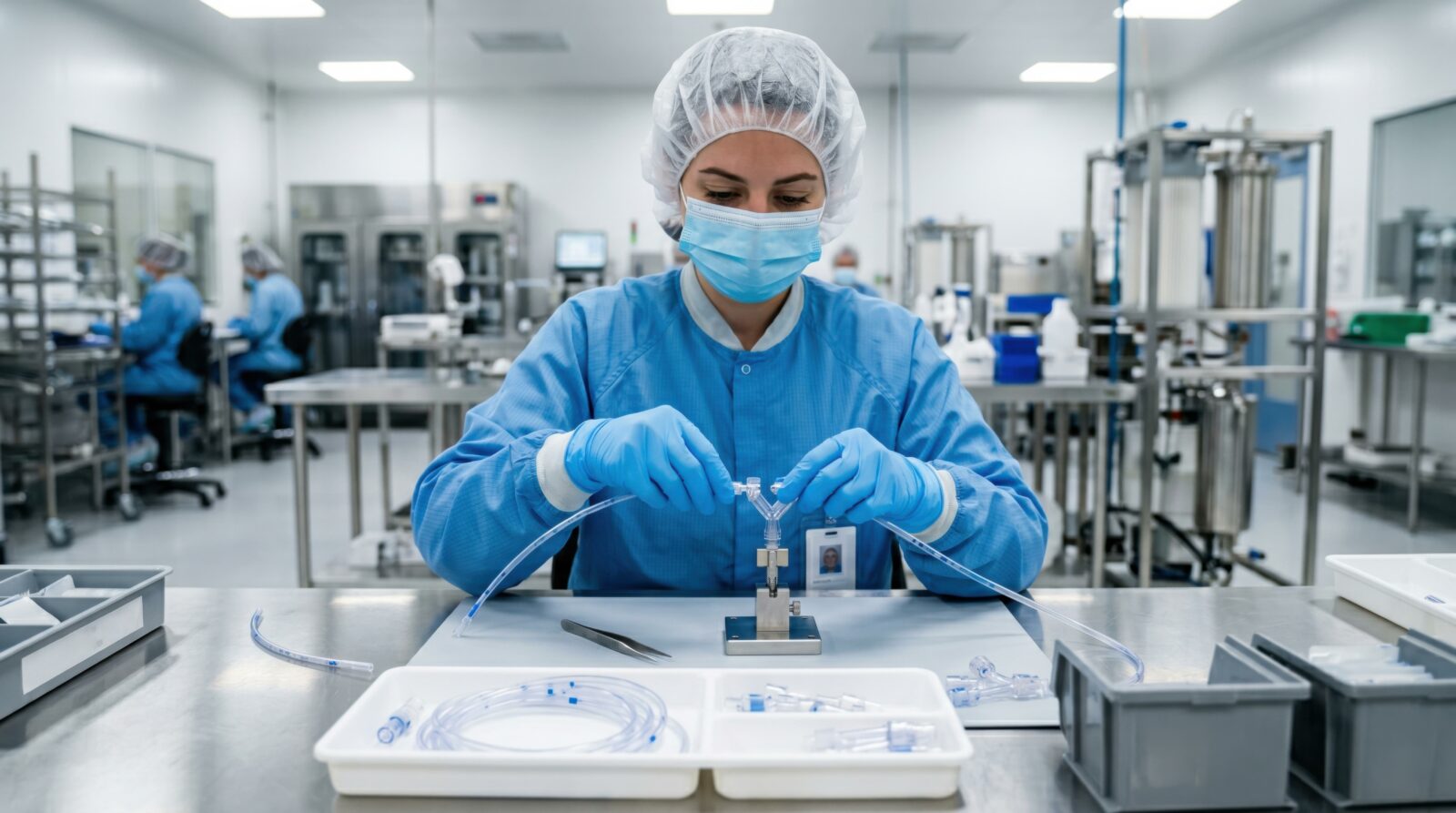
The way components are presented to an assembly team can have a direct impact on how easily and consistently they can be handled. Packaging that requires unnecessary manipulation, multiple handling steps or difficult component identification can introduce additional time and complexity into the manufacturing process.
Conversely, packaging designed around the assembly process can help create a more organised and repeatable workflow. The objective isn’t necessarily to make packaging as simple as possible.
For example, if an assembly process involves multiple components that need to be handled in a particular sequence, packaging could potentially be designed to present those components in a logical order. This can help reduce unnecessary movement and make the assembly process more intuitive.
For medical device manufacturers, bringing packaging considerations into the conversation earlier can therefore help ensure that the packaging and production processes work together rather than operating as separate parts of the manufacturing workflow.
Variation can create complexity. Where different products, departments or production lines use different packaging formats for similar applications, manufacturers may need to manage additional materials, specifications, processes and training requirements.
Standardisation can help reduce this unnecessary variation where it makes sense to do so. A consistent packaging format can make processes easier to understand and replicate. It can also support staff training, simplify inventory management and help create more predictable production workflows.
However, standardisation doesn’t mean every medical device should use identical packaging. Medical devices have different sizes, shapes, materials, functionality and protection requirements. Packaging therefore needs to be appropriate to the device and its intended use.
Manufacturers might consider whether packaging components can be standardised across product ranges, whether similar assembly processes can use the same approach or whether a smaller number of packaging formats could replace multiple variations.
Packaging doesn’t stop being important once a device has been assembled.
After production, a medical device may need to be stored, transported, distributed and handled several times before reaching its final destination. Each stage introduces different considerations. Packaging that works well during assembly but creates unnecessary difficulties during storage or transportation may not provide the best overall solution.
This is why manufacturers should consider the complete product journey when evaluating packaging. A well-considered packaging solution can help create greater consistency from the manufacturing environment through to the point of use.
It can also help manufacturers identify opportunities to reduce unnecessary handling and improve the efficiency of storage and distribution. Ultimately, packaging should be viewed as part of the supply chain rather than an isolated manufacturing component.
A packaging process that works effectively at one production volume may not necessarily work as well when demand increases. For manufacturers experiencing growth, moving into new markets or launching a new device, scalability should therefore be considered from the outset.
Imagine a process that requires significant manual handling for every device. At low production volumes, this may be manageable. As demand increases, however, the additional labour, time and packaging requirements can become a bottleneck.
This is why packaging design should consider not only today’s requirements but also where production could be in the future. Planning for these scenarios can help manufacturers avoid having to redesign packaging at the point when production is already under pressure.
Scalability is also about security of supply. A packaging solution is only effective if the materials required to produce it are consistently available and meet the necessary specifications.
Working with an experienced packaging partner can therefore provide value beyond the initial design stage. It can help manufacturers consider how packaging requirements may evolve as their business develops.
When selecting packaging, it can be tempting to focus on the purchase price. However, the lowest unit price doesn’t necessarily represent the lowest overall cost.
A packaging solution needs to provide the appropriate level of protection for the device while supporting efficient manufacturing and complying with relevant quality and regulatory requirements. There may also be additional costs associated with storage, handling, assembly time, waste, damaged products and supply interruptions.
This means manufacturers should consider the total cost and value of the packaging solution, rather than evaluating it purely as a commodity. The most effective medical device packaging solutions are developed by considering the wider manufacturing and supply-chain requirements rather than treating packaging as an afterthought.
At Pennine Healthcare, we understand that medical device manufacturers have different requirements depending on their products, production processes and markets. We work with medical device manufacturers to help develop packaging solutions that balance these requirements, combining practical design considerations with the need for consistency, protection and scalability.