In today’s NHS, healthcare organisations are under increasing pressure to deliver high-quality patient care while managing budgets, reducing waste and making the best use of clinical time.
For procurement and purchasing teams, this means looking beyond the initial purchase price of a medical consumable and considering the wider impact products can have across the supply chain and clinical environment. For nurses and clinical decision-makers, it means finding ways to make everyday processes more efficient without compromising patient care. One area where these priorities come together is the use of Anaesthetic Packs.
Anaesthesia procedures can involve a range of individual consumables, all of which need to be specified, ordered, stored, prepared and used by clinical teams. When these processes are repeated across healthcare settings, even relatively small inefficiencies can quickly add up.
Standardisation provides an opportunity to address some of these challenges. By bringing commonly required components together into a carefully considered pack, healthcare organisations can potentially reduce unnecessary waste, simplify procurement and support greater consistency in clinical practice.
However, successful standardisation isn’t simply about putting products into a pack. It is about understanding the complete workflow, listening to clinical teams and ensuring that the products supplied genuinely reflect the needs of the procedure.
Waste in healthcare isn’t limited to products that are thrown away. It can occur at numerous points throughout the supply chain, from excess stock and unnecessary packaging to products that remain unused or reach their expiry date.
Ordering individual components for procedures can make it harder to maintain an accurate picture of what is actually required. Departments may also hold duplicate stock or use different products for the same procedure.
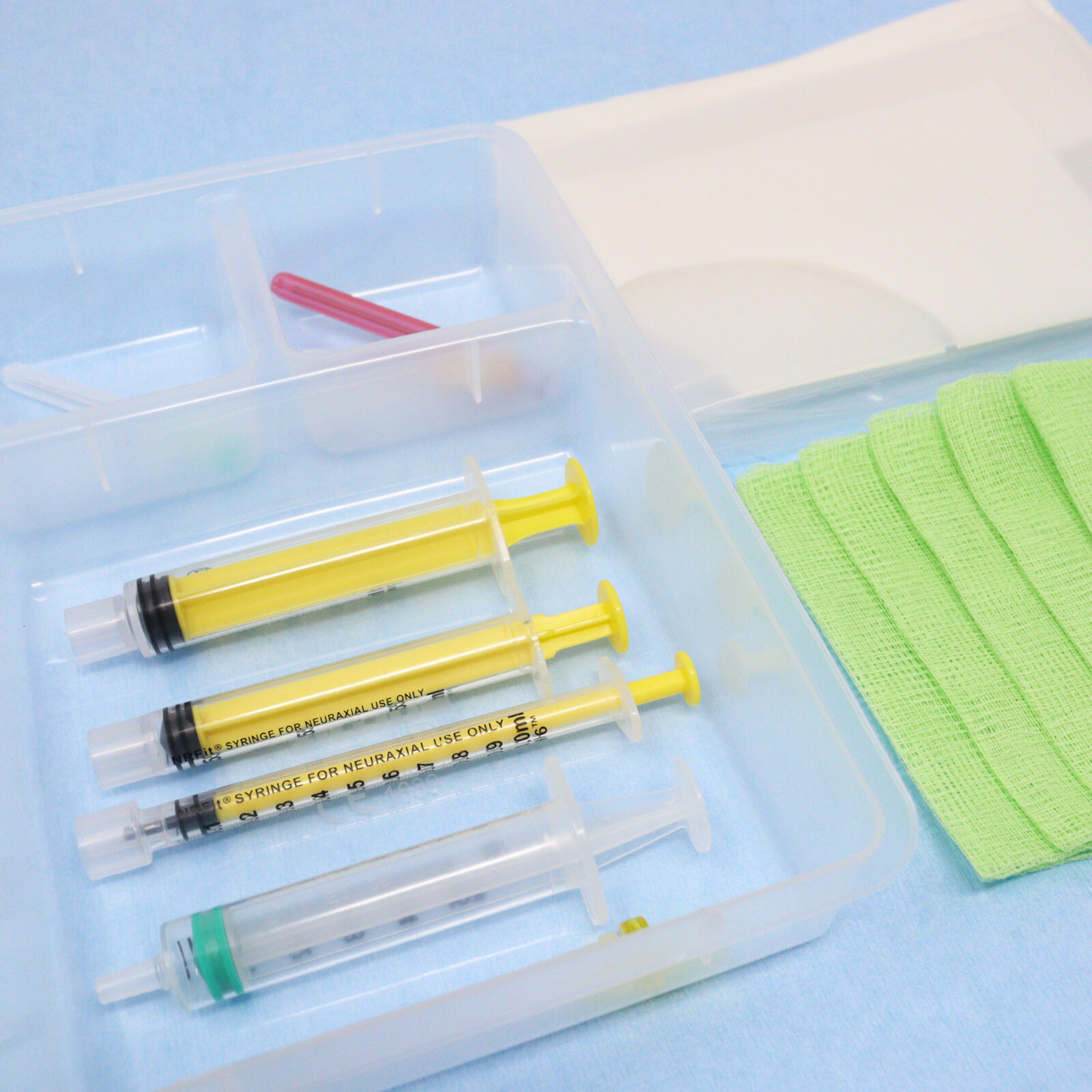
Standardised Anaesthetic Packs can provide one potential solution by grouping commonly required products together according to a specific clinical application.
Rather than managing every component independently, teams can work from an agreed pack configuration. This can create greater predictability around what is ordered, stored and used, while potentially reducing unnecessary packaging and unused products.
However, standardisation isn’t simply about putting more products into a pack. A poorly configured pack could create another form of waste if it contains components clinicians don’t routinely use.
Procurement teams manage an enormous range of products, suppliers and specifications. Every individual consumable introduces another item that needs to be purchased, tracked, stored and managed. When multiple products are routinely required for the same procedure, consolidating them into a standardised pack can help simplify this process. Instead of sourcing and managing a collection of individual components, a defined pack can provide a more streamlined purchasing route.
This can potentially support:
For NHS procurement professionals, this can be particularly valuable where the same procedures are performed regularly.
Standardisation can also improve communication between procurement and clinical teams. Rather than purchasing individual products in isolation, teams can consider the complete clinical requirement and how it can be supported through a more standardised approach.
This doesn’t mean every department needs to use exactly the same products. Instead, it means identifying where there is unnecessary variation and asking whether that variation adds value.
In this context, standardisation can become a strategic procurement tool rather than simply a purchasing decision.
The benefits of standardisation extend beyond procurement. For nurses and other clinical staff, preparing for a procedure can involve gathering numerous individual components. If products are stored in different locations or teams use different configurations, this can add unnecessary steps to the process.
A standardised pack can bring commonly required components together, helping create a more predictable preparation process. For staff who regularly carry out procedures involving Anaesthesia, familiarity with a consistent pack configuration can make it easier to identify and prepare the required items. This can support greater consistency and potentially reduce time spent locating individual products.
It can also be useful when staff move between departments or when new team members are introduced to a particular workflow. A clearly defined pack can provide a consistent reference point.
However, clinical practice isn’t one-size-fits-all. Different procedures, specialties and patients have different requirements. Standardisation should therefore support clinical practice rather than restrict it. Clinical teams should be involved in deciding what belongs in a pack, with configurations based on real-world usage and established clinical requirements.
One of the biggest mistakes when evaluating medical consumables is focusing exclusively on unit price. A lower purchase price doesn’t necessarily mean a lower overall cost. An individual product needs to be specified and ordered, delivered and checked, stored and managed, picked and prepared before it reaches the point of use. If a procedure requires ten individual products, there are potentially ten separate products that need to be managed.
This is why organisations considering standardised Anaesthetic Packs should look at the whole workflow, rather than simply comparing the cost of a pack with the combined purchase price of its individual components. Looking at these factors can reveal opportunities for efficiency that aren’t visible when considering unit price alone.
It can also help organisations identify potential cost-savings beyond the initial procurement transaction. Reducing unnecessary stock, simplifying ordering and saving clinical time could all contribute to the overall value of a standardised approach.
Perhaps the most important consideration is that standardisation shouldn’t be approached as a one-size-fits-all exercise. A pack containing too many products can create unnecessary waste. A pack that doesn’t contain everything clinicians need can create additional work, defeating the purpose of standardisation altogether.
The right approach starts by understanding the clinical requirement.
What does the procedure actually require? Which components are routinely used? Which products are frequently left unused? Where do staff experience delays? And where is there unnecessary variation between teams?
These questions can help organisations develop a pack that reflects how procedures are actually performed.
For NHS organisations, one of the greatest opportunities presented by standardisation is its ability to connect procurement objectives with clinical priorities. Procurement teams may be looking for ways to simplify purchasing and identify cost-savings. Clinical teams may be looking for ways to make procedures more consistent and reduce preparation time. When a pack is designed around genuine clinical requirements, standardisation can help address both. The key is to avoid viewing procurement and clinical efficiency as separate conversations. The products being purchased directly influence the processes in which they are used.
At Pennine Healthcare, we recognise that every healthcare environment has its own requirements. Our Anaesthetic Packs range is designed to help healthcare organisations explore a more standardised approach to commonly required consumables, while keeping the practical needs of clinical teams at the centre.